Footprints and Photographs
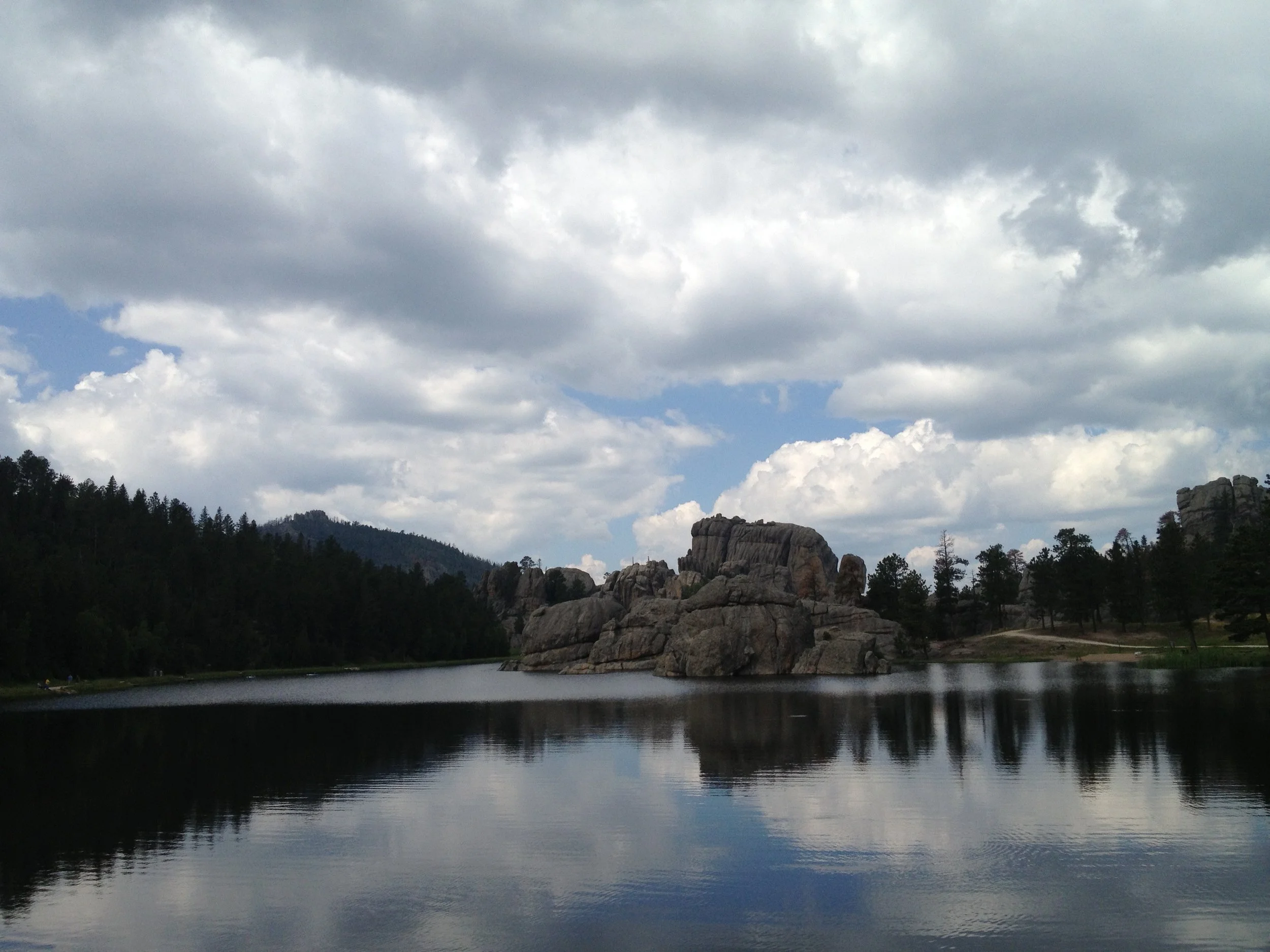
SYLVAN LAKE (CUSTER STATE PARK, SD)
Photo by Brian Schoenle
Instrumentation:3 Flutes (3 dbl. picc.)
2 Oboes
3 Clarinets in Bb
Bass Clarinet
2 Bassoons
Soprano Saxophone
Alto Saxophone
Tenor Saxophone
Baritone Saxophone
3 Trumpets in Bb
4 Horns in F
3 Trombones
Euphonium
Tuba
Steel String Acoustic Guitar (amplified)
Timpani
Percussion 1: Suspended Cymbal, Snare Drum, Bass Drum, Tambourine, Crash Cymbals, Triangle
Percussion 2: Woodblock, Triangle, Tam-tam, Castanets, Mark Tree, Bamboo Wind Chimes, Cabasa, Crash Cymbals
Percussion 3: Marimba (four mallets), Chimes, Crotales, Hi-hat, Vibraphone, Glockenspiel, Xylophone, Tambourine
Duration: 7:30As the first half of my twenties has quickly come and gone, I’ve found myself increasingly nostalgic for my childhood—it feels like a lifetime ago, yet simultaneously as recent as yesterday. Much of my nostalgia is centered around memories of places I visited long, long ago, and these memories are inseparable from the music I heard at the time. My reminiscence has caused me to wonder more about these emotions: what causes them? Are my memories accurate, or just an illusion? How does music play a role in all of this?
Footprints and Photographs addresses these questions with a musical portrayal of my nostalgia for four natural places I’ve visited over the years. The first movement, “Honeoye,” is named for the New York Finger Lake of the same name, a favorite destination of my mother’s family when I was very young; the second, “McIntosh,” is named for a camping area in Allegany State Park, also in New York, where I spent many summers during my formative years; “Sylva” is named for Sylvan Lake in Custer State Park, South Dakota, where my family visited for a week when I was 14; and “El Capitan” is of course the iconic rock in Yosemite National Park, which I saw for just a few hours at age 16. The movements are arranged chronologically according to when I spent time in these places, and this structure explores the ways in which my more recent memories seem nostalgic in a different way than those older. The name of the piece comes from the common phrase associated with natural places such as these: “take only photographs, leave only footprints.”
An important underlying element of the piece is a melody I’ve termed the “nostalgia theme.” I first composed this in the abstract, then cut it into pieces and recompiled it in various ways throughout the piece in a reference to the evolution of my memories over time. The first movement uses a fragmented, surface-level version of the theme; the second a more melodic, lyrical paraphrase; the third an almost unrecognizable, yet structurally integral version; and the last finally incorporates the full theme for the first time. The nostalgia theme— as well as other components of the piece— references bits and pieces of music I recall from these places; however, I have chosen to leave the content of these references a secret—an Easter egg for the curious listener.
The last component of the piece worth addressing is the inclusion of acoustic guitar. The guitar was the first instrument I ever learned, starting when I was seven years old. Through all of my travels over the years, for leisure, school, or work, my experience with this instrument has influenced my perception of nearly everything musical. I wouldn’t be the musician—or perhaps even the person—I am today without my dad having handed me a guitar for the first time all those years ago. I thus thought it imperative that I use the guitar as a sort of personification of myself on my journey through these places and memories.
Though I don’t usually make dedications in my scores, I would like to dedicate this piece to my family: Mom, Dad, and Maddi. They’ve been with me in each of these places and through all of these memories, and I wouldn’t be able to do what I do without them. I will forever cherish the footprints and photographs we’ve made and taken together over the years. I love you all.
November 2025 - Athens, Georgia